

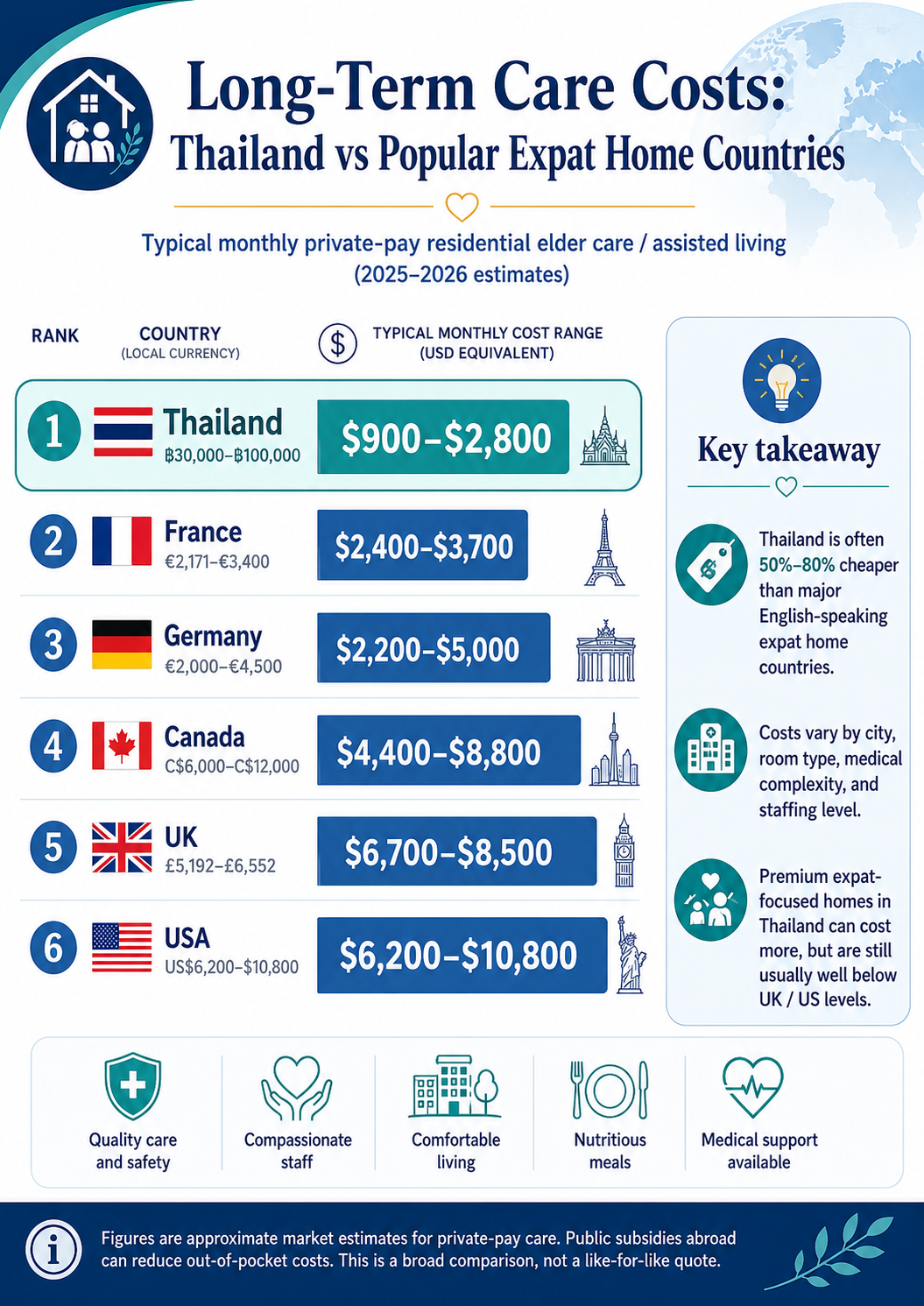
For many foreign residents in Thailand, one of the biggest attractions is the possibility of receiving residential care, assisted living, or elderly support at a much lower cost than in countries such as the United Kingdom, United States, Canada, Germany, and France.
Depending on the level of care required, Thailand may offer substantial savings. Lower staffing costs, accommodation expenses, and general operating costs can allow some Thai care providers to offer private rooms, meals, personal assistance, nursing support, and daily activities for far less than similar services in many Western countries.
However, price should never be the only consideration.
The quality of care can vary between providers, and families should carefully check staffing levels, nursing qualifications, medical supervision, emergency procedures, language support, hospital access, accommodation standards, and the experience of caring for people with conditions such as dementia, limited mobility, or complex medical needs.
Premium international care homes in Thailand can cost considerably more than standard local facilities, particularly when they offer English-speaking staff, high caregiver-to-resident ratios, private accommodation, specialist dementia care, or access to private hospitals. Even so, these facilities may still be significantly cheaper than comparable private care in the UK or United States.
For retirees already living in Thailand, remaining in the country for long-term care may also offer important lifestyle benefits. These can include familiar surroundings, warmer weather, access to affordable private healthcare, and the ability to remain close to a Thai spouse, family members, or established friends.
There are also practical issues to consider. Long-term visa requirements, health insurance, legal arrangements, family communication, and the cost of travelling between Thailand and a person’s home country should all form part of the decision.
Important Disclaimer
The figures shown in this infographic are broad approximations intended only to give readers a general idea of possible cost differences and potential savings.
Actual prices can vary considerably depending on the country, city, care provider, room type, exchange rate, medical condition, staffing requirements, and level of personal or nursing care needed.
Public subsidies, government-funded care, insurance coverage, and means-tested support may also reduce the amount paid by residents in some countries.
The comparison should therefore not be treated as a guaranteed price, formal quotation, financial recommendation, or exact like-for-like comparison. Anyone considering long-term care should contact individual providers directly, request a full written breakdown of costs, visit the facility where possible, and seek professional medical, legal, and financial advice before making a decision.